Journal · Entry 01 · October 2026 · ⴰⵙⵙⴼⵔⵓ 01
Where the mill came from, and why the land comes first
Brahim and I first talked about building a mill in 2017. The idea came out of the challenges of developing Anou's dye studio at David Beach, just north of Casablanca. Working through them, and then getting the dyeing right, showed us how many more problems sat upstream in the wool itself. If we were going to do this well, we would have to do the whole supply chain, from the sheep to the skein.
Then the wool sent us further upstream, to the land. A fleece takes a year to grow, and it carries that year with it. When the grazing is poor, the fibre comes in thin and weak, and we see the difference at the mill from one year to the next. Wool is a proxy for environmental health.
Anou was founded in Aït Bouguemez, a centre of farming, sheep and wool. I came here in 2008 as a Peace Corps volunteer to work on deforestation and overgrazing, and helped Brahim legalise his wood shop by planting a tree for every piece sold. Bringing that work to market grew into Anou. Now the mill, a spin-off of the cooperative, brings it back to the land where we started.
Through this journal we will discuss wool, yarn, sheep, climate and agriculture, and openly share the data and the interventions we pursue in the valley. We hope it helps other areas in Morocco do the same. This first entry is the story so far.
The first idea
Before the solar array, before the machines, before the building, the idea was a question: how do you build a mill that regenerates land? In 2019 I wrote an environmental strategy to answer it, built on satellite research. Which land had been used, which had been developed, which had been degraded, and which of the degraded areas could be brought back?
Better wool from all the sheep we work with means thinking about land at the same scale. The strategy named five areas as targets for a rotational grazing cycle: south of Aït Blal, south Aït Bouli, Aït Bouguemez–Sermept–Aït M'hamed, Zaouiat Ahansal and Tilouguite.
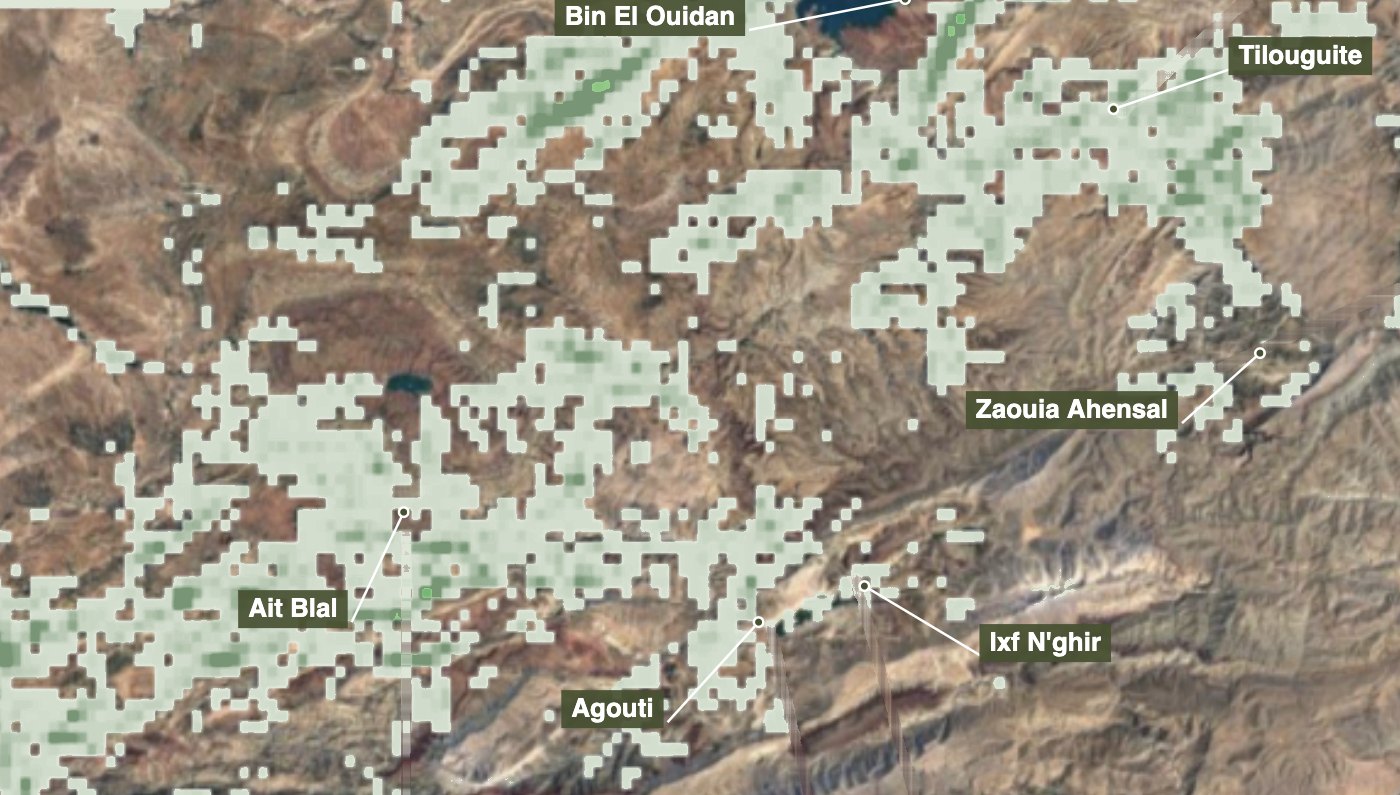
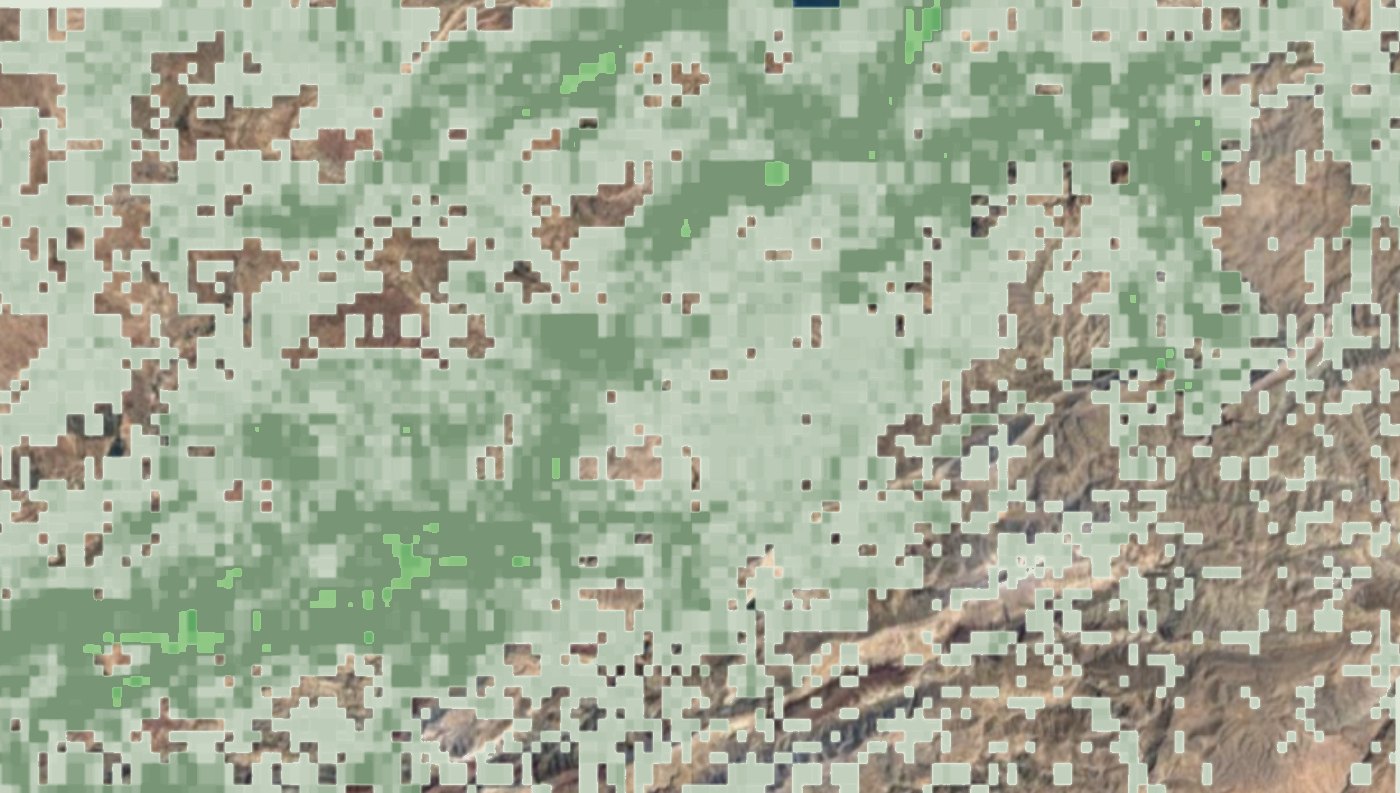
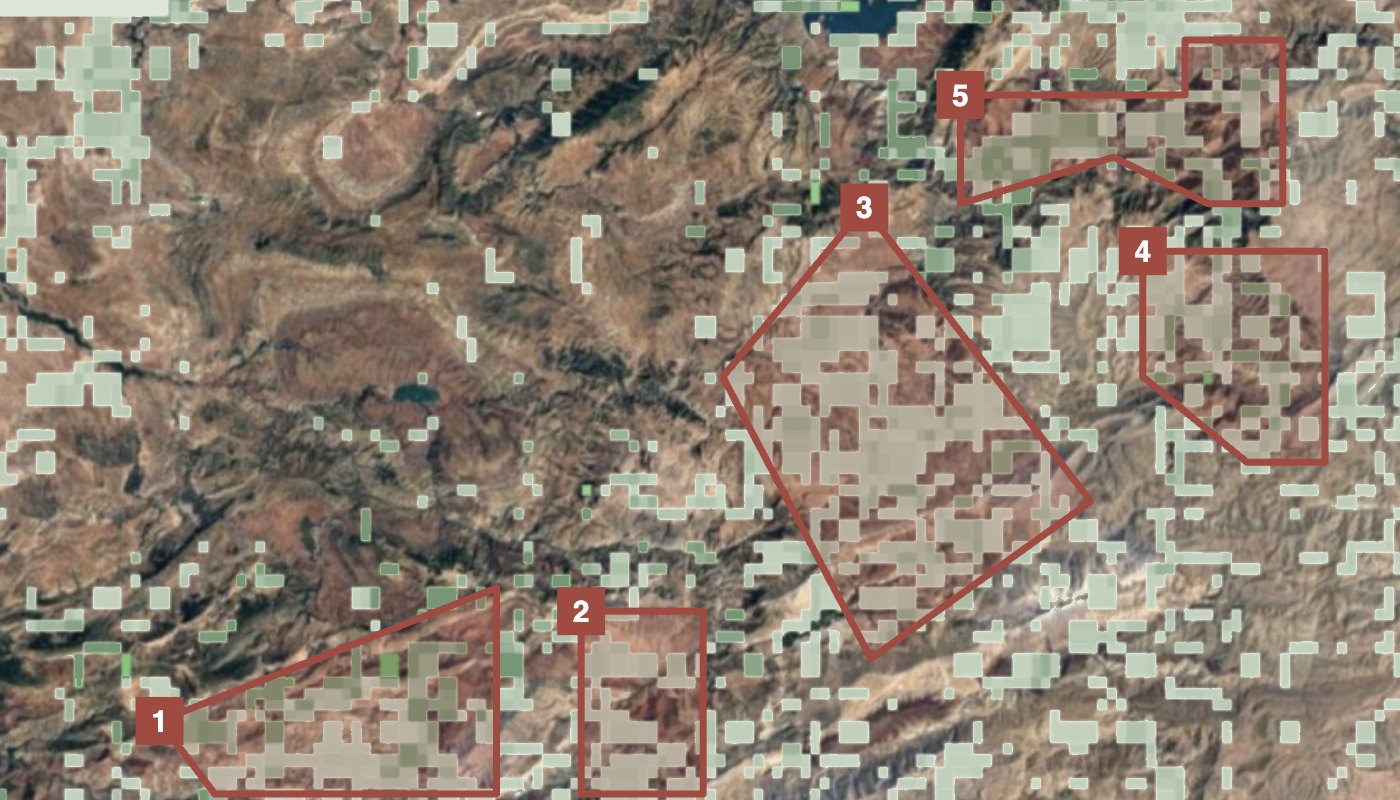
Then, in 2020, a five-year drought began. Now that it has eased, one of those five areas, the forest around Tilouguite, has not rebounded. The satellite record shows it still about 15% less green than before the drought, while the other four recover. That is what we can measure from above; next we need to go out to Tilouguite and see what is happening on the ground. By the satellite's measure, one of our five grazing areas is already lost, at least for now. It will likely take several years to recover, and only if the drought does not return, which we expect it will. That is how hard this problem will be.
Below is the same land, seen by the Landsat satellites every spring from 2013 to 2026, with the five areas outlined. Press play to watch the drought arrive and the land begin to recover.
How each area has recovered
Spring greenness in each area, compared with its own average from 2013 to 2021. When the rain came back, four areas started climbing towards their old normal. Tilouguite, the forested area (5), has stayed about 15% below.
Data: USGS Landsat 8 and 9 (Collection 2, Level 2), every image from April to June each year with clouds and snow removed, 45 m per pixel. Greenness is NDVI, a standard measure of living plant cover. Area outlines are traced from our 2019 strategy maps, so their edges are approximate.
Looking at the land whole
We built the mill, and it has grown. Along the way we learned that land regeneration cannot be looked at one piece at a time. If the farming around us wastes water, it drains what the rest of the ecosystem depends on.
We always planned for the mill to run off the grid one day. Problems with the utility meant it did so from the first day, on our own solar farm. The catch with solar is that you design for winter, so in summer you make more energy than you can use. That surplus was our first step into the farming of the valley.
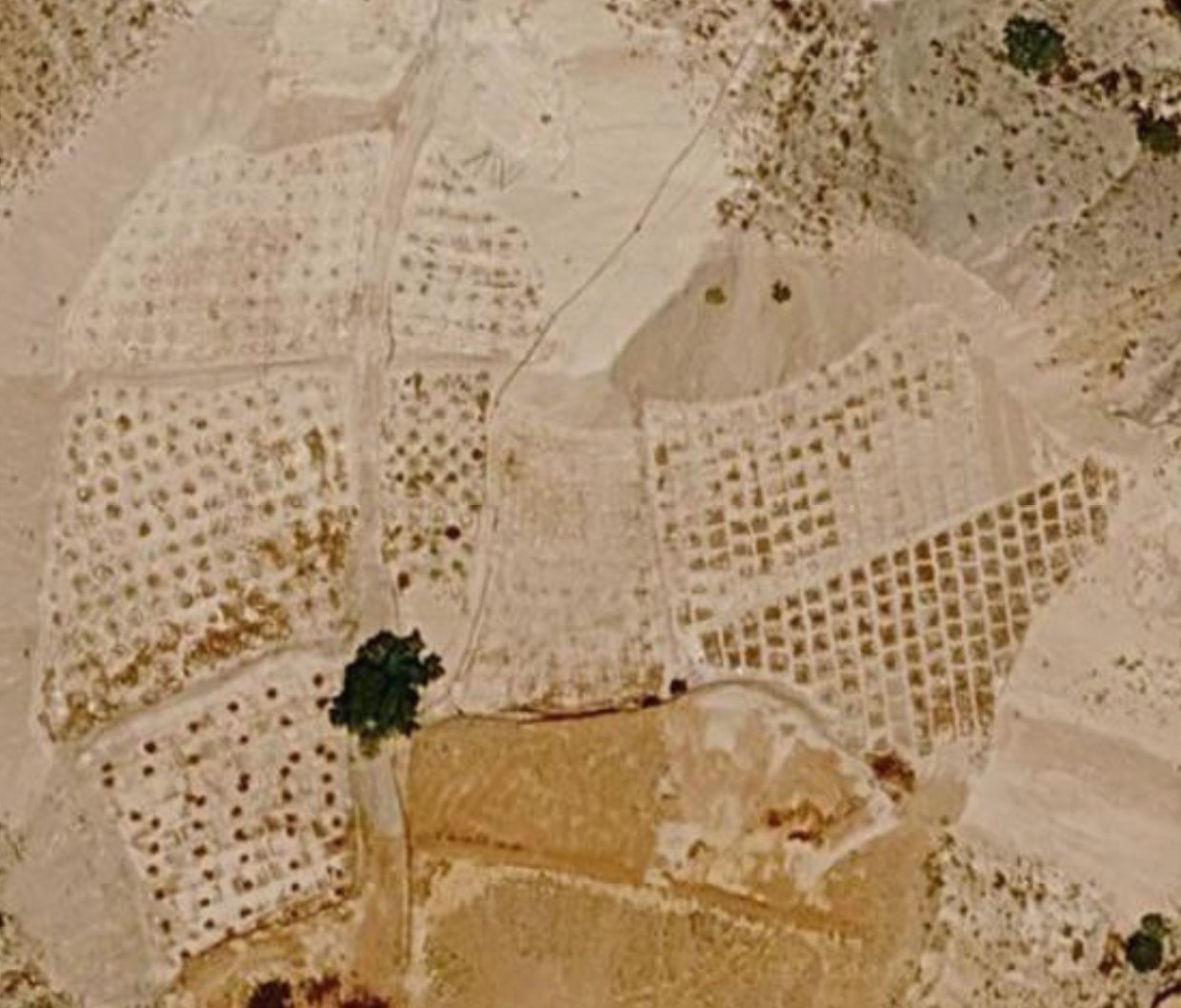
Today the extra energy goes to farmers. Pumps that ran on diesel now run from our solar inverter, avoiding a great deal of carbon, which we measure and publish. 1,400 apple trees are watered by solar-pumped drip irrigation and fed with compost made from discarded apples and wool too poor to spin. Seen from above, those plots are grids of dots, fitted inside walls that follow the curve of the land.
The orchards, the water and the grazing are all one valley, and the wool is how we will know if we are looking after it. The better we are as stewards of this land, the better it should show in the yarn.
A future vision rooted in the past
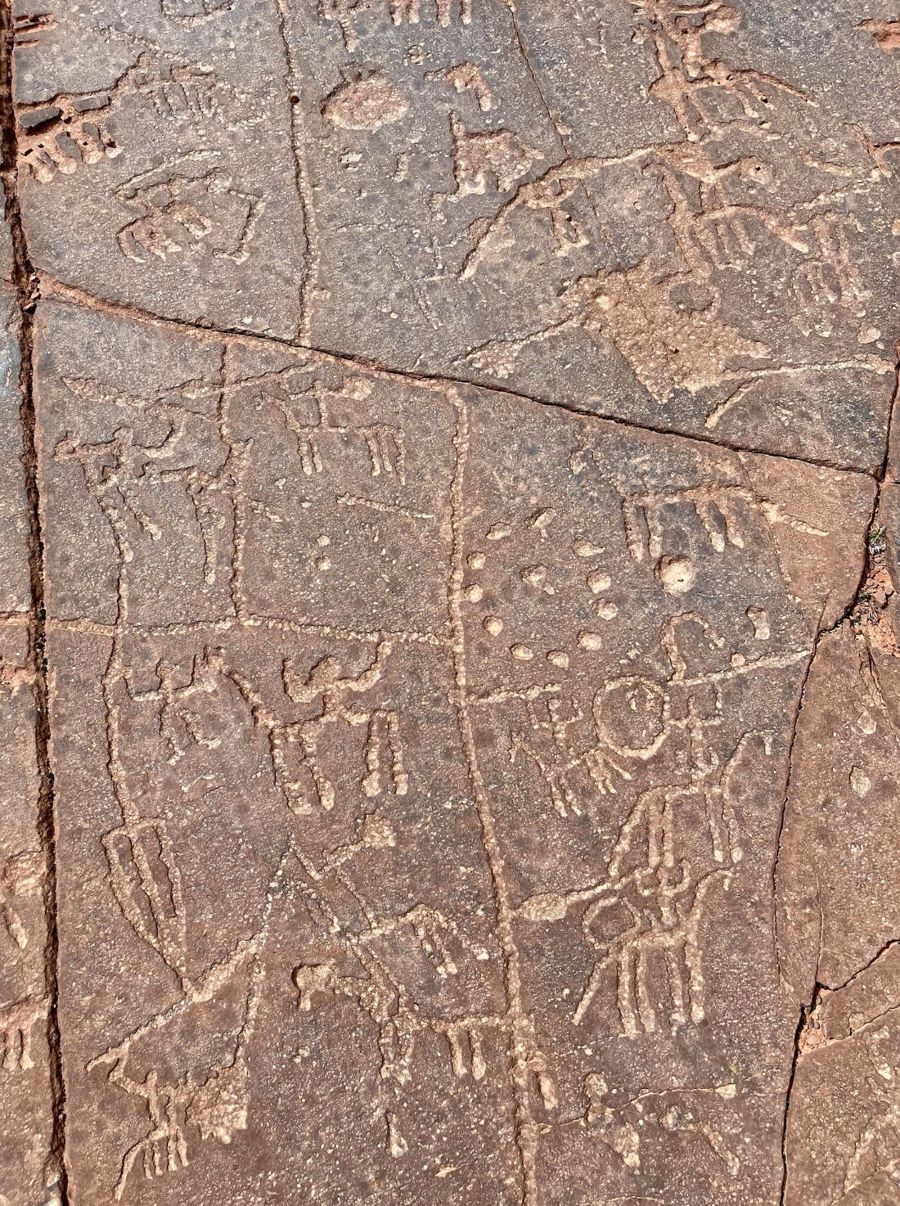
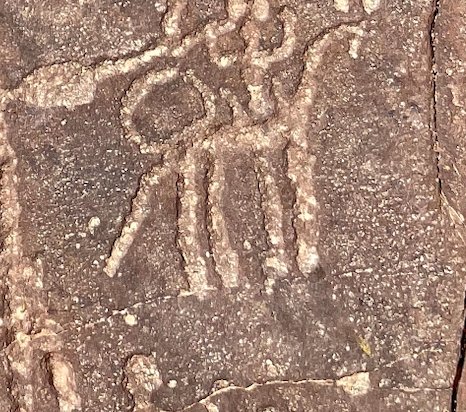
Above the valley at Tizi n'Tighrest there are rock carvings from the Bronze Age: riders, animals, sun wheels, rows of small hollows. They are the symbols of this journal, because they represent the vision we are working towards: solutions rooted in heritage and land, and a way of life that survives an increasingly hostile climate.
Little is known of what the carvings meant, but it is clear to us that many of them are symbols of the sun or the moon, and of the calendar that followed them. What is certain is that the sun was as important 3,000 years ago as it is today. The spears, horses and scenes of battle remind us not to accept the world as it is, and to be aggressive in shaping what it becomes.
This journal is not a guide. It is a record of our work in the valley: what works, what doesn't, and what we are still learning. We hope it becomes a conversation, with villagers in Aït Bouguemez and beyond who already know this land, and with researchers and scientists in Morocco and around the world.
We believe it will take the technology we build, the heritage Anou carries, the knowledge of the people who farm and graze this valley, and the sheep and yarn themselves, working together, for the environment of Aït Bouguemez to last long beyond the lifetime of anyone reading this. Here's to building that future.